
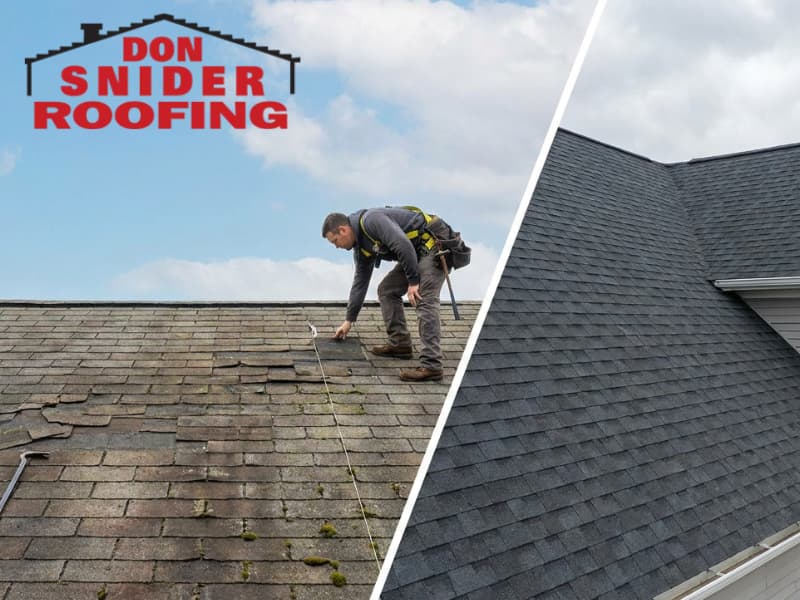
Roof Repair vs Roof Replacement
A damaged or leaking roof does not always require complete replacement. In many cases, a professional roofer can fix an isolated problem and extend the roof’s service life. However, repairing a roof that is extensively damaged or nearing the end of its useful life may only delay the inevitable.
So, how do you decide between roof repair and roof replacement?
The answer depends on the roof’s age, the extent of the damage, the condition of the underlying materials, and whether leaks keep returning. Homeowners in Butler County, Warren County, and Hamilton County should also consider the effects of Southwest Ohio’s rain, wind, hail, snow, ice, humidity, and temperature fluctuations.
Here is how to make a more informed decision about your home.
When Is Roof Repair the Right Choice?
Roof repair is usually appropriate when damage is limited to a small area and the rest of the roofing system remains in good condition.
For example, repair may be the best option if your roof has:
- A few missing or damaged shingles
- One isolated leak
- Minor flashing damage
- A damaged pipe boot or roof vent
- Limited wind damage
- A small area of granule loss
- A problem around a chimney or skylight
- Plenty of expected service life remaining
A professional repair should address the source of the problem—not merely cover the visible symptom. A ceiling stain, for instance, may appear several feet away from the point where water enters the roof. Water can travel along decking, rafters, and insulation before becoming visible inside the house.
That is why a detailed inspection is important. The inspection can help identify the actual entry point and determine whether surrounding shingles, flashing, decking, ventilation, or insulation have also been affected.
When Should You Replace Your Roof?
Roof replacement becomes the more practical option when deterioration affects a large portion of the roofing system. It may also be recommended when repeated repairs are no longer providing a dependable solution.
Common signs that you may need a new roof include:
- Frequent leaks: New water stains continue appearing after previous repairs.
- Widespread shingle damage: Shingles are curling, cracking, lifting, or missing across several roof sections.
- Heavy granule loss: Large quantities of shingle granules collect in the gutters or around downspout openings.
- Exposed shingle matting: The protective surface has worn away, leaving the underlying shingle material exposed.
- Sagging roof areas: A visible dip or sag may indicate damaged decking or a more serious structural concern.
- Extensive storm damage: Wind or hail has affected multiple slopes rather than one isolated area.
- Persistent attic moisture: Condensation, damp insulation, mold, or stained decking may point to leaks or ventilation problems.
- Advanced age: An older roof showing several warning signs may be a better candidate for replacement than continued repairs.
Age alone does not determine whether a roof must be replaced. Installation quality, maintenance, ventilation, materials, tree coverage, storms, and roof design can all affect its longevity. The roof’s current condition is more important than a date by itself.
Should You Repair an Older Roof?
Repairing an older roof can make sense when the issue is minor and the roof is otherwise performing well. However, homeowners should compare the cost of the repair with the roof’s remaining service life.
Imagine repairing one section this year, another leak next year, and damaged flashing the year after that. Those individual bills can add up without providing the reliability of a complete replacement.
Replacement may offer better long-term value when:
- The roof has multiple problem areas
- Matching the existing shingles is difficult
- Repairs are becoming more frequent
- The roof deck requires extensive work
- You expect to remain in the home
- You want to improve protection and appearance
- A major portion of the roof already needs work
A reputable roofing contractor should explain both options when repair remains realistic. Homeowners deserve to understand why a particular solution is being recommended.
How Southwest Ohio Weather Affects Your Roof
Roofs in Butler and Warren counties experience changing conditions throughout the year. Strong winds can lift shingles and loosen flashing. Hail may damage the shingle surface, while heavy rain can expose weaknesses around valleys, vents, skylights, and chimneys.
Winter can create different problems. Snowmelt may refreeze near the edge of a roof, contributing to ice dams. Poor attic insulation or ventilation can make this issue worse by allowing warm indoor air to heat the roof unevenly.
Summer heat and humidity can also place stress on roofing materials. Over time, repeated expansion and contraction can contribute to cracking, seal failure, and deterioration.
After a major storm, inspect your property from the ground. Look for shingles in the yard, damaged gutters, loose siding, fallen branches, or visible roof debris. Never climb onto a wet, icy, steep, or storm-damaged roof.
What Happens During a Professional Roof Inspection?
A professional inspection evaluates more than the shingles. Depending on the home and roofing system, the roofer may examine:
- Shingle condition and granule loss
- Roof valleys and ridge lines
- Chimney and wall flashing
- Skylights, vents, and pipe penetrations
- Gutters and drainage
- Signs of wind or hail damage
- Visible decking problems
- Attic moisture and ventilation
- Interior ceilings and walls
- Previous repair areas
The goal is to determine whether the problem is isolated or part of broader roof deterioration. Once the inspection is complete, the homeowner should receive a clear explanation of the findings and recommended next steps.
Does Insurance Cover Roof Damage?
Homeowners insurance may cover roof damage caused by a covered event, such as wind or hail, but it generally does not cover deterioration caused by age, neglect, or routine wear. Coverage, deductibles, exclusions, and payment methods vary by policy.
If you suspect storm damage, document visible conditions safely and contact your insurance provider to review your coverage. A roofing contractor can inspect the roof and document its condition, but the insurance company determines whether a claim is covered.
Avoid any contractor who guarantees claim approval or offers to manipulate an insurance estimate.
How Do You Choose a Roofing Contractor?
Choosing the right roofer is just as important as choosing between repair and replacement. Ask prospective contractors about their experience, insurance, warranties, materials, inspection process, and cleanup procedures.
Don Snider Roofing has served area homeowners since 1989. Its fully licensed, insured, and bonded team provides roofing installation and repair throughout Butler County, Warren County, Hamilton County, and the Cincinnati area. The company also offers siding, gutters, chimney services, skylights, and home insulation.
Customers can choose from quality roofing options, including Atlas and Owens Corning shingles. Every project begins with a consultation and detailed inspection, followed by a recommended solution, professional installation or repair, and final review.
Roof Repair vs Roof Replacement – Get a Free Roofing Estimate
If your roof is leaking, missing shingles, or showing signs of age, do not wait for minor damage to become a larger interior problem. Don Snider Roofing can inspect your roof and help you compare repair and replacement options.
Call (513) 777-5581 to request a free estimate for roofing services in Butler County, Warren County, Hamilton County, or the greater Cincinnati area.
Frequently Asked Questions
Can only part of a roof be replaced?
In some situations, one slope or section can be replaced. Feasibility depends on the damage, roof design, material availability, and condition of the remaining roof.
How long does roof replacement take?
Many residential roofing projects are completed within a few days. Roof size, slope, material, decking repairs, and weather can affect the schedule.
Can missing shingles cause a leak?
Yes. Missing shingles can expose the roofing system to rain and wind. A leak may not appear immediately, so prompt inspection is recommended.
Is a leaking roof always replaced?
No. An isolated leak caused by damaged flashing, a pipe boot, or a small shingle area may be repairable. Widespread deterioration may require replacement.
How can I schedule an inspection?
Contact Don Snider Roofing at (513) 777-5581 to discuss your concerns and request a free roofing estimate.
Blog by: Foster Group